

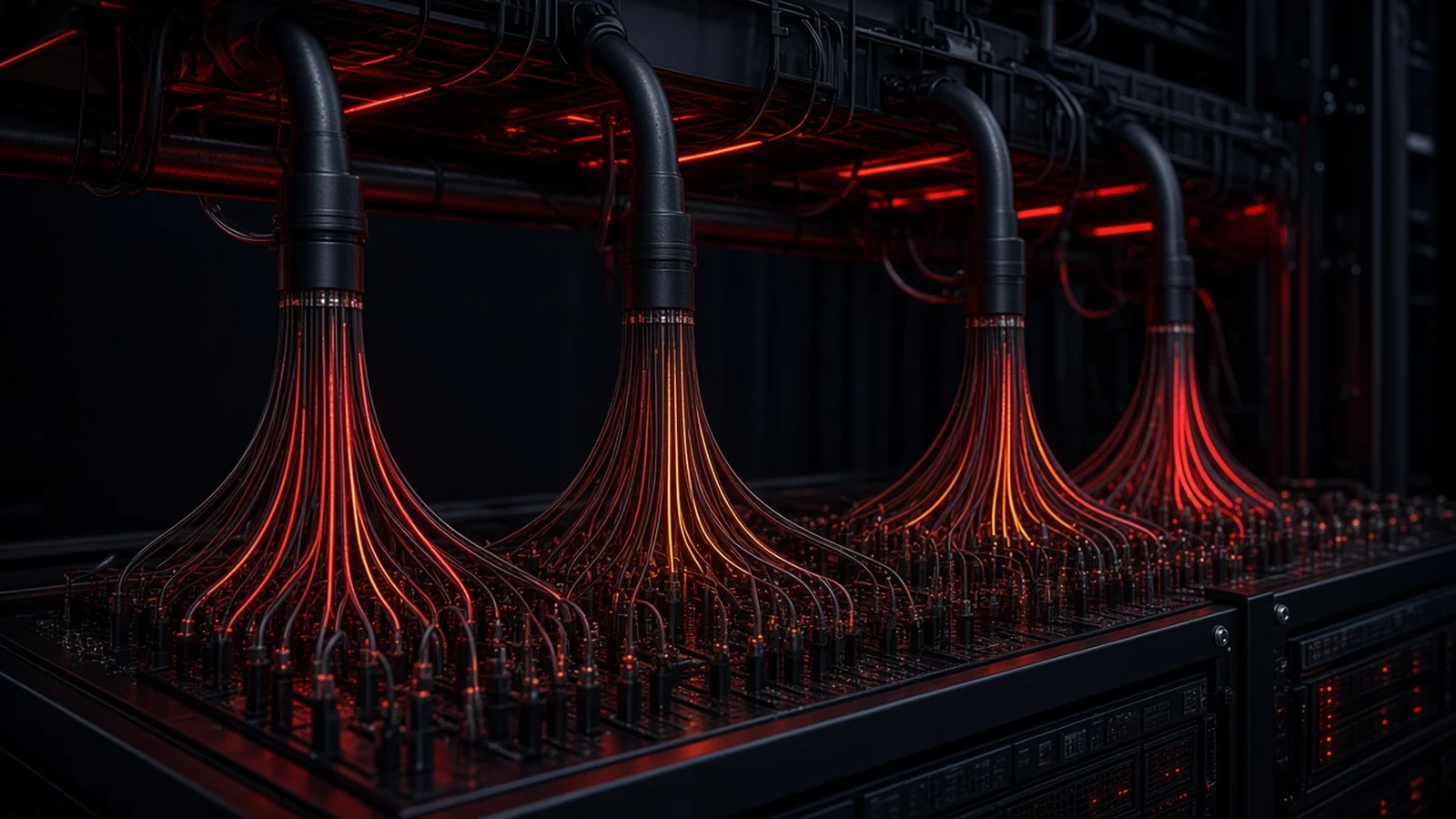
A network architect buying colocation in Astana needs more than “there is a rack”: the question is how the site meets external circuits. On the Akashi Data Center campus (street C316, site 7) the public wording is four independent optical entries and an exit onto the East–West digital backbone. A cross-connect in the TCO structure is a separate bill line, not “included in the cabinet”. Placement formats are a cabinet, a cage and a dedicated hall. Until May 2027 this is a configuration reservation, not a live hall.
What follows stays inside site facts. The carrier list, the number of already-live circuits, capacity in Gbit/s and the turn-up time for a cross-connect are not published.
Why colocation needs separate optical entries
A single carrier remains a single point of failure, whatever the hall class. That is a criterion in the Kazakhstan colocation guide: look at the count of physically independent optical entries, whether several carriers are on site, the cost and lead time of cross-connects, and the routes to users and partners.
Akashi’s campus wording is four independent optical entries, tied to the East–West digital corridor. At the 24 September 2026 technical press tour the campus was called carrier-neutral: the client will be able to choose telecom partners and routes against resilience, throughput and latency. That is architecture language, not a shop-window list of carriers already sitting in the hall. Build context is in the Astana campus piece.
Other sites and competing carriers are not named here: the comparison is entries and neutrality, not someone else’s brand.
A cross-connect is its own TCO line
In the colocation cost structure the bill usually has space, electrical power, network attachments and service operations. Space and power are the standing part. Cross-connects and remote hands are the variable part. Attachments are described as a one-off plus a recurring component: when offers are compared, you look at cross-connect cost and lead time and at the number of carriers on site.
The same TCO piece asks you to add cross-connects in the count and redundancy you actually need — after converting the offer to a price per kilowatt. Akashi does not publish a per-port price, an SLA for turning a cross-connect up, or “N free connects in the cabinet”. If the cross-connect matters, it belongs in the request and the contract, not on the product card.
Remote hands and access sit next to that TCO model; how to lock them before the hall opens is in remote hands and access.
What is already public about connectivity plans
At GCCM 2026 in Almaty, Akashi signed a memorandum of understanding with Türk Telekom International (TTI). Turkish outlets reported the signing on 16 September 2026. The frame: interconnecting data centers, evaluating shared use of infrastructure, new connectivity routes, joint products and services. Both sides intend to turn those workstreams into concrete projects.
That is not a claim that interconnects are already live and carrying traffic. The signing is covered in the TTI MoU news item. This text cannot promise a ready exchange point or a list of turned-up carriers.
Cabinet, cage or hall — and a reservation until May 2027. TCDD is not TCCF
A cross-connect is needed for one cabinet, for a multi-rack zone and for a dedicated hall. What changes is the placement perimeter, not the fact that the circuit has to be agreed separately. The path from request to format to reservation is in Where to place servers in Kazakhstan.
Phase one launches in May 2027. Until that date the site agrees a configuration and the makeup of attachments, not a delivery into an open hall. Public build progress sits on construction-progress.
Phase-one documents hold Uptime TCDD Tier IV: certification of the design, not of the built hall. The TCCF audit is planned for April 2027. TCDD is not TCCF. The Tier IV topology calculation is 99.995%; that is not a measured outage of a circuit.
What to ask sales before a reservation
The form is contacts, consultation block. It helps to name at once: the format (cabinet / cage / hall) and rack count; how many cross-connects you need and with what redundancy; where cross-connects should land; what must sit in the contract. Sales replies within one business day, runs a pre-qualification and a capacity check, and sends a proposal with prices, timelines and technical detail. There are no shop-window list prices. An NDA is available on request. Email and phone: sales.department@akashi.cloud, +7 700 810 3010.
Need to see how Astana colocation meets circuits, not only a rack? Send a request — we will go through the entries, the cross-connects and the reservation before May 2027.
Frequently asked questions
How many optical entries does the Akashi campus publish? Four independent optical entries and a link to the East–West digital backbone. The operator set is not listed on the shop window. Capacity in Gbit/s and turn-up times are not published.
What is a cross-connect in colocation cost? A separate TCO line: network attachments next to space, power and remote hands. It is a one-off plus a recurring part of the bill. There is no per-port price on the site.
Which carriers already sit in the Akashi hall? The site does not fix an on-site carrier list. The campus is described as carrier-neutral: the client chooses partners and routes against its own requirements. That is design wording, not a list of live interconnects.
Does the MoU with Türk Telekom International mean interconnects are already live? No. The document sets a frame: interconnecting data centers, evaluating shared infrastructure, routes and joint services. It is an intent to turn those workstreams into projects, not a turned-up circuit.
When can a cross-connect be ordered in the hall? Phase one is May 2027. Until opening, you reserve the placement format and which interconnects you need. TCDD confirms the design, not the built hall. TCDD is not TCCF.